Re: Legal Random, Random
Posted: Sat Jul 23, 2022 1:40 am
We still talk about tennis. And much more.
https://talkabouttennis2.com/

One key point of the California Court of Appeal ruling was that petitioners’ case involved conduct that allegedly occurred after the petitioners left the church:Petitioners in this writ proceeding are former members of the Church of Scientology who reported to the police that another Church member had raped them. They allege that, in retaliation for their reports, the Church encouraged its members to engage in a vicious campaign of harassment against them. After petitioners brought suit in superior court against the Church and related entities and persons, some of those defendants moved to compel arbitration, relying on agreements that provided all disputes with the Church would be resolved according to the Church’s own “Ethics, Justice and Binding Religious Arbitration system.” That system was created to decide matters “in accordance with Scientology principles of justice and fairness.”
The Court of Appeal opinion is officially unpublished and therefore carries little to no weight as precedent under the California Rules of Court (Rule 8.1115, specifically).Individuals have a First Amendment right to leave a religion. We hold that once petitioners had terminated their affiliation with the Church, they were not bound to its dispute resolution procedures to resolve the claims at issue here, which are based on alleged tortious conduct occurring after their separation from the Church and do not implicate resolution of ecclesiastical issues. We issue a writ directing the trial court to vacate its order compelling arbitration and instead to deny the motion.
At times co-opting language from the Court of Appeal opinion, the church asserts in its petition to the U.S. Supreme Court that its followers consented to an “irrevocable agreement” to “submit disputes to Scientology arbitration” — which is just “one of the prices of joining [the Scientology] religion.”(1) Where a parishioner freely executes a religious arbitration agreement with her church, does the First Amendment prohibit enforcement of the agreement if the parishioner leaves the faith?
(2) Does the First Amendment restrict the terms on which a Church may accept members into its faith?
The statement of the case continues:Contracts are contracts, even when a church is a party. It should go without saying that contracts with churches are entitled to the same protection under the law as contracts with secular entities. The California Court of Appeal disagrees. It held that a voluntary party to an otherwise enforceable contract with a church may annul that contract by asserting a First Amendment right to “leave the faith” and “extricate” themselves from the church. While secular entities can enforce contracts over the objections of a party that no longer wishes to be bound, churches now cannot, as long as a party asserts a change of faith. The Court of Appeal deprived churches of the contractual right that really matters – the right to enforce. And it did so expressly because churches are religious.
A response to the church’s petition is due Aug. 22, according to the Supreme Court’s docket for the case.The dispute here is simple. The Respondents, as a condition for joining Petitioners’ church, repeatedly and expressly agreed to religious arbitration of any disputes between them and Petitioners, regardless of when those disputes arose. The agreement to submit disputes to religious arbitration is not anomalous. American courts have long recognized the right of religious institutions to use dispute resolution procedures derived from and guided by their foundational beliefs and scripture. Secular courts have placed agreements to submit disputes to religious arbitration on equal footing with agreements calling for secular arbitration – and declined invitations to discriminate against religious arbitration just because it is religious.
At some point, Respondents changed their minds, and their faith. They argued that their change of faith should free them from their contractual obligations to submit their disputes with Petitioners to the chosen religious forum. The California Court of Appeal agreed. It became the first court in the nation to overturn a freely executed religious arbitration agreement based on the objection by a party that the selected forum was exactly what the party agreed to – religious. The Court of Appeal arrived at this result by finding state action in the judicial enforcement of religious arbitration agreements, while acknowledging that the enforcement of secular arbitration agreements does not amount to state action.
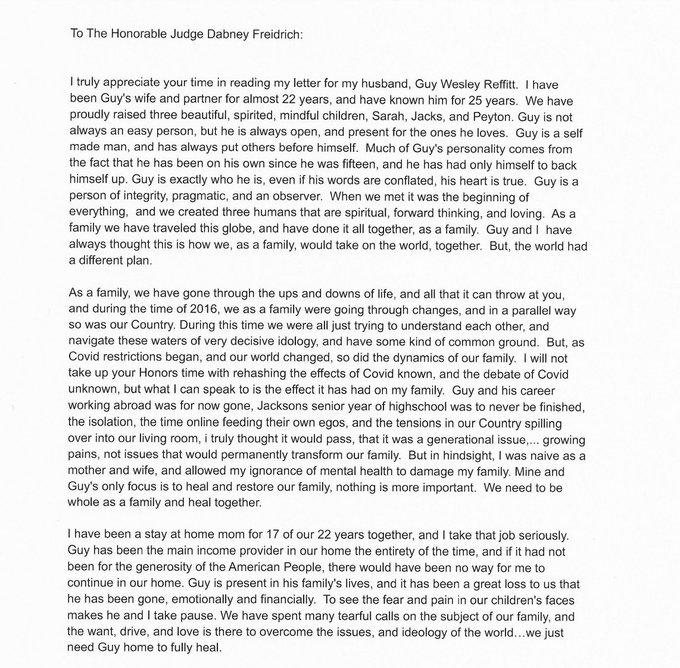
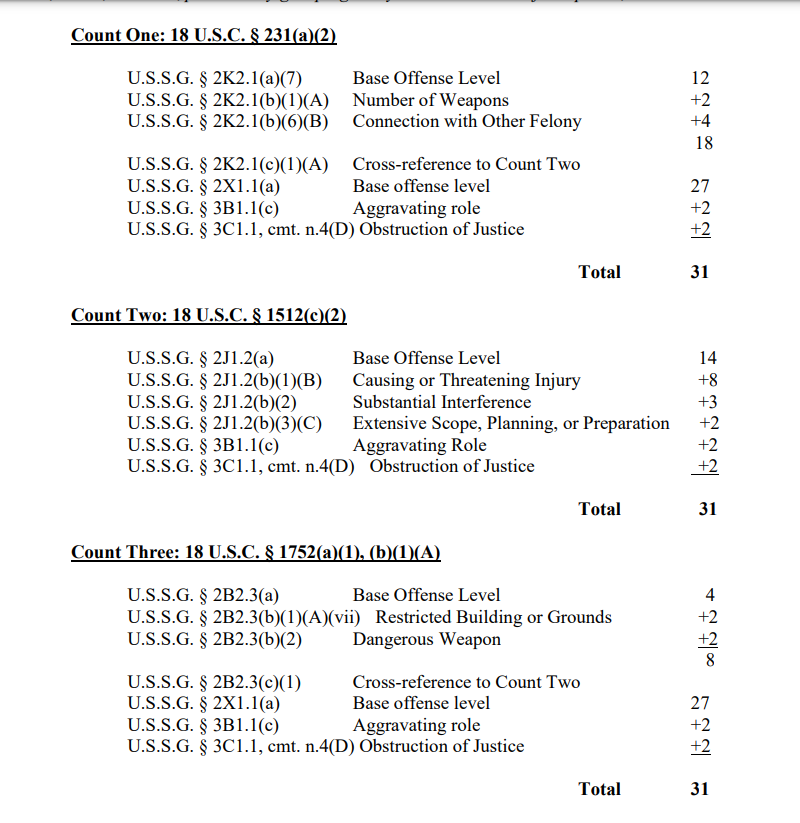
 SENTENCE: U.S. District Judge Dabney Friedrich orders Guy Reffitt to serve 87 months in prison, to be followed by 3 years of supervised release. Warns if he violates terms she will send him back to prison for up to maximum term. $2,000 in restitution.